


In the constant quest to build a better mousetrap, PGR Slot Cars has bitten the bullet and begun developing our own motors.
After several years of searching, I have finally sourced a factory who specialise in slot car motors. There are hundreds, probably thousands, of factories out there making generic motors in the formats commonly used in the slot car world (FC-130 short cans, FF-050 slimline, etc, etc.) but these factories mainly supply motors for car window winders, electric toothbrushes, vibrators, etc and they have no idea of the requirements for a good slot racing motor. Not worth dealing with when you need to meet their very high Minimum Order Quantity (MOQ).
Having found the right factory, I'm pleased to introduce the first of a range of PGR slot car motors.
PGR-25K-BB-FK-130:
The first motor I've developed is an FK-130 format short can. Anyone who has a Revo car will be familiar with this format motor.
The main difference between the FK-130 and the more common FC-130 short can (NSR, Slot.It, Scalextric, Carrera, etc) is the lower height which (comes from the terminals exiting the back of the motor rather than above the motor). This lower height was the main reason why I chose this format for my first PGR motor because I've been developing a BRM P167 to send to the HRW 2026 CanAm proxy series. Because the rear deck of the P167 is quite low, there is not enough room for the terminal block above an FC-130 short can. Another advantage of the FK motor is that they seem to have higher torque ratings than the FC motors. And I'm always looking for the most torque I can get.
So I went for the maximum performance I could get. I asked for the three things on my Wishlist - high torque; ball bearings; strong braking.
Having now run a few race meetings with this motor, I can say that the factory has delivered me the Wishlist in full! The 390 g/cm of torque allows a higher than usual gearing which delivers great speed while retaining fantastic acceleration. For a motor this powerful, the power delivery is very linear and controllable. And, even though I've geared it quite tall, the braking is phenomenal. I usually run my controller with full braking dialled in. When I'm running this motor I need to dial out all braking or it will pretty much lockup the rear axle when I back right off.
So what's the secret? Well, I'm sure that the ball bearings contribute to the smooth power delivery. But the main contributor to the torque and brake performance has to be the magnets. Phenominally strong neodym magnets. Specifying these magnets increased the ex-factory price by about 50% but, having raced this motor, I reckon they are worth very cent!
This is a very notchy motor when you turn it over by hand. But add electricity and she just spins.
For those who race on plastic or magna braid tracks, there is another by-product of these neodym magnets. About 85 grams of measured magnetic downforce!
How can I fit this motor into my cars????
Having decided to go with an FK format motor (because that's what I needed for my proxy car), I knew that this could inhibit sales because it won't easily fit into many RTR cars. Obviously, it will bolt straight into any Revo car (and will give it a huge performance upgrade). But, to upgrade most other brands, another solution was needed.
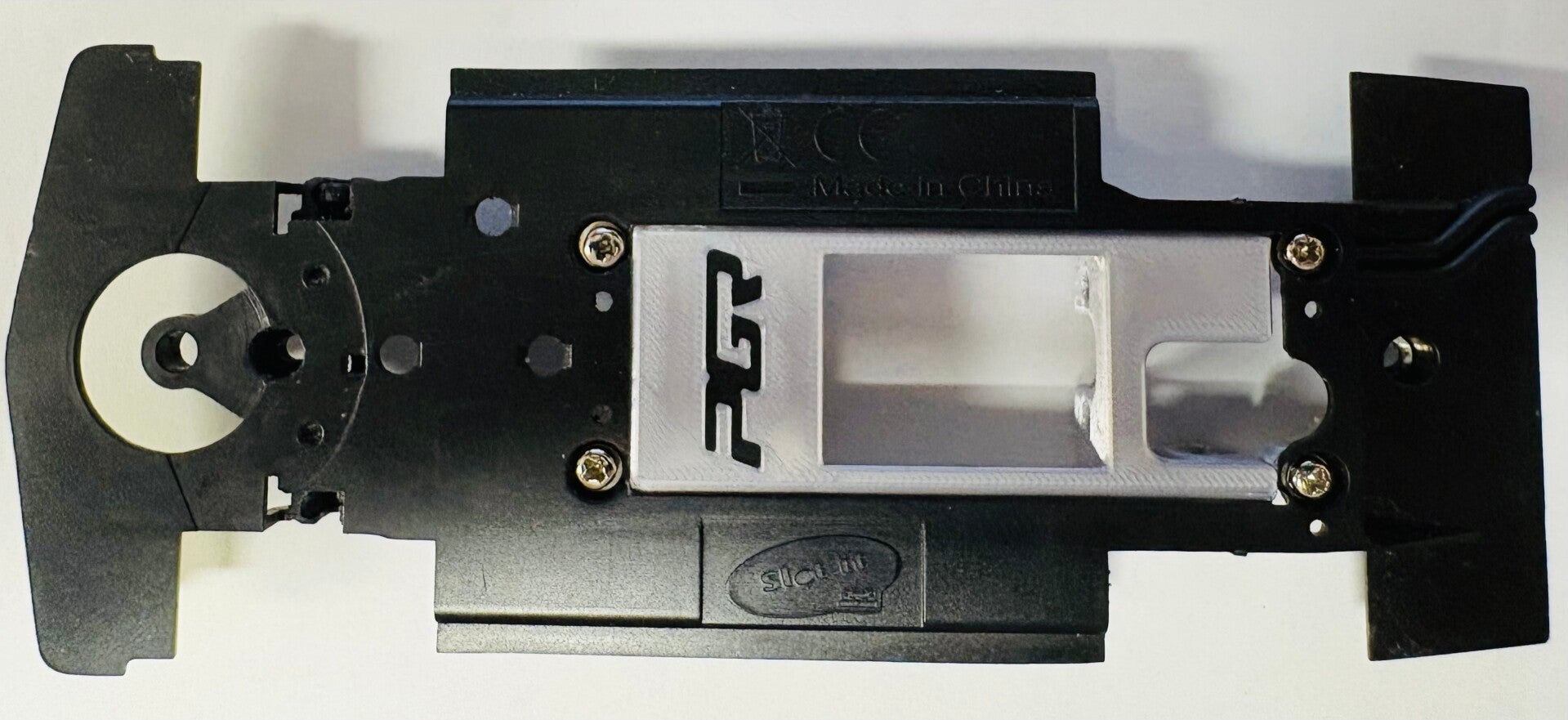
So I've begun to draw and print pods which will hold this motor and screw straight into other brands of RTR cars.
These pods are available as a motor+pod combo for $30.00 (AUD)
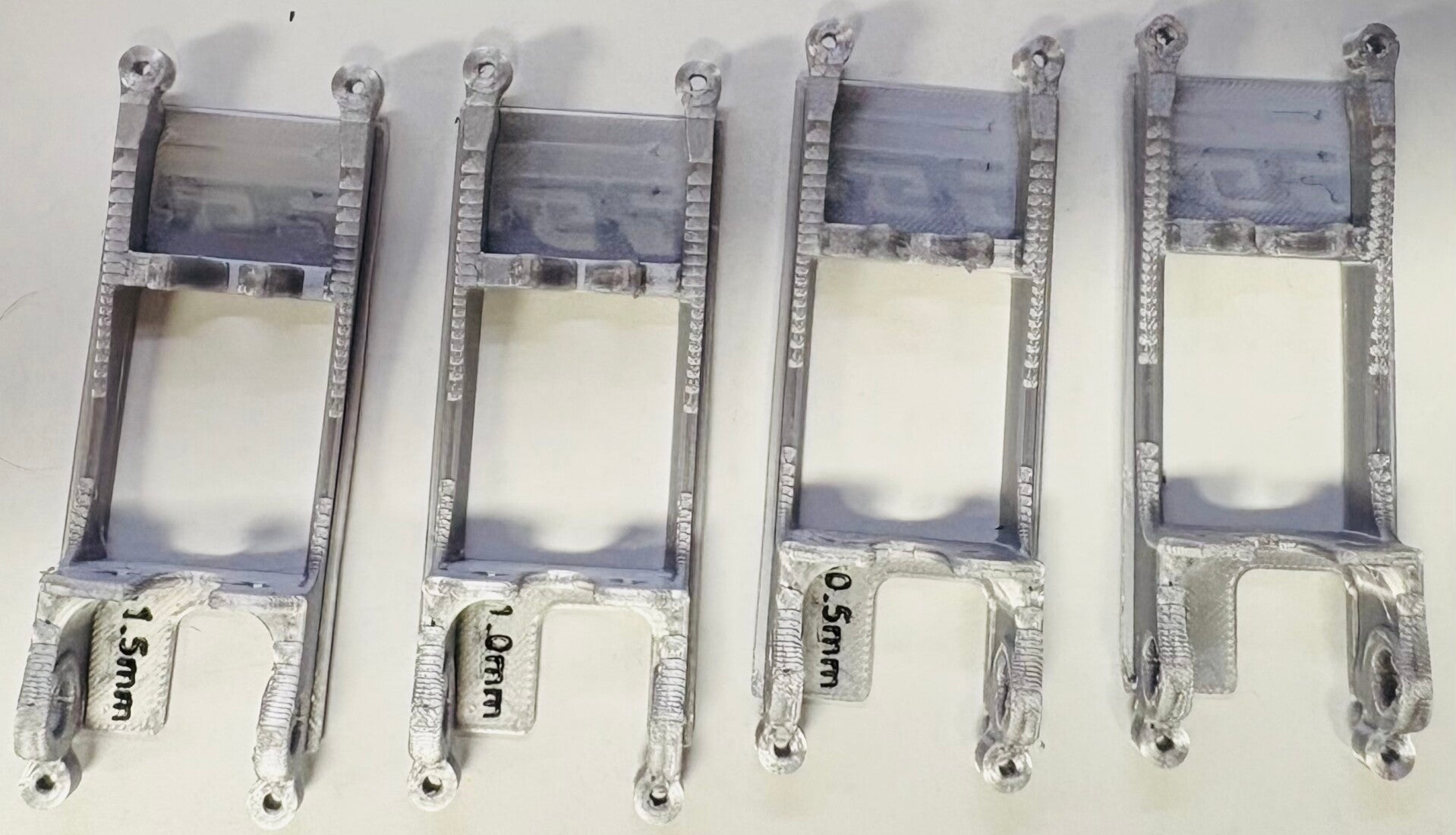
Thus far, I have done inline pods which seamlessly replace a Slot.It inline pod. Four offset options - 0.0mm; 0.5mm; 1mm; 1.5mm.
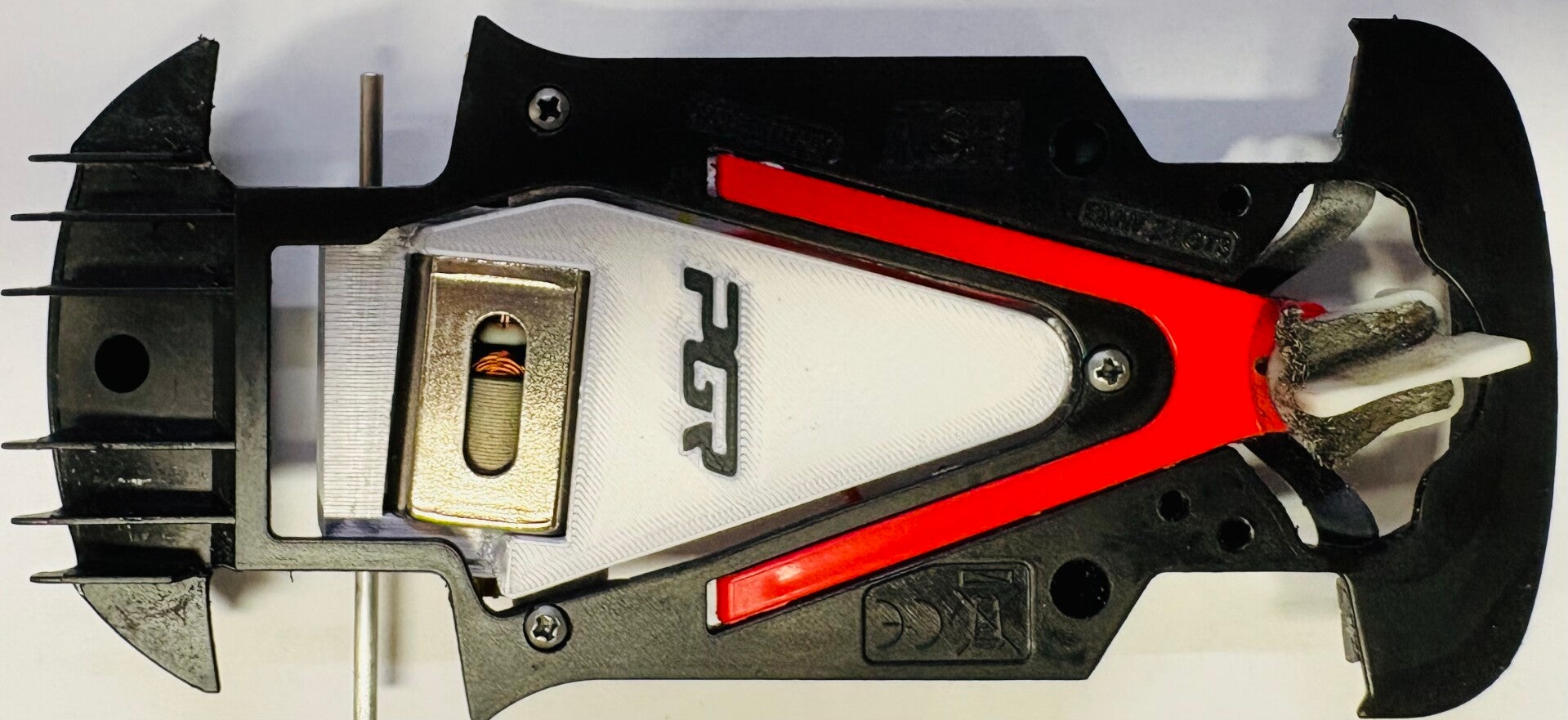
I've also done a sidewinder pod to replace an NSR triangular pod.
I'll do other pods on request. Go to the Motors page and check all of this out.
Add comment
Comments