

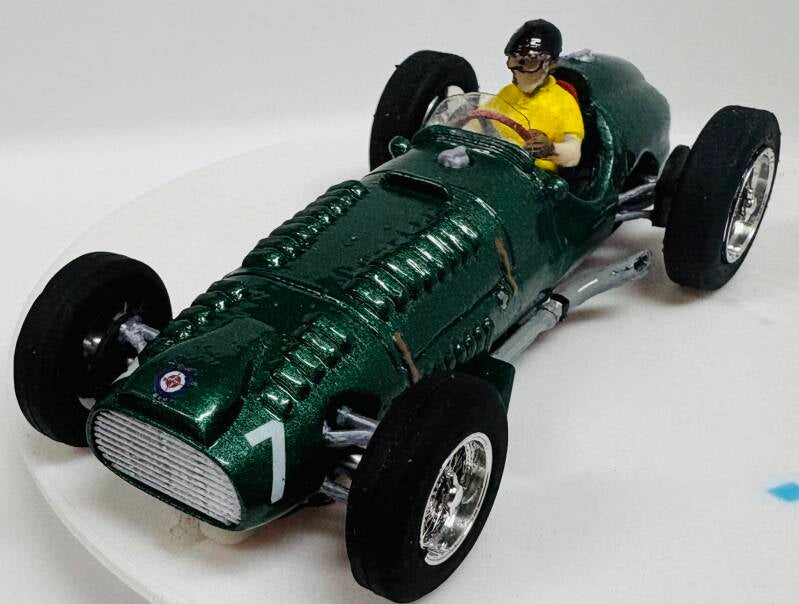
Every now and then a build comes along that turns into something a little more involved than originally planned. This BRM P15 V16 definitely ended up in that category.
The BRM P15 is one of those cars that is impossible not to like. Tiny 1.5 litre engine, enormous supercharger boost, and apparently enough noise to upset people several suburbs away. Perfectly sensible engineering, at least by late 1940s Grand Prix standards.
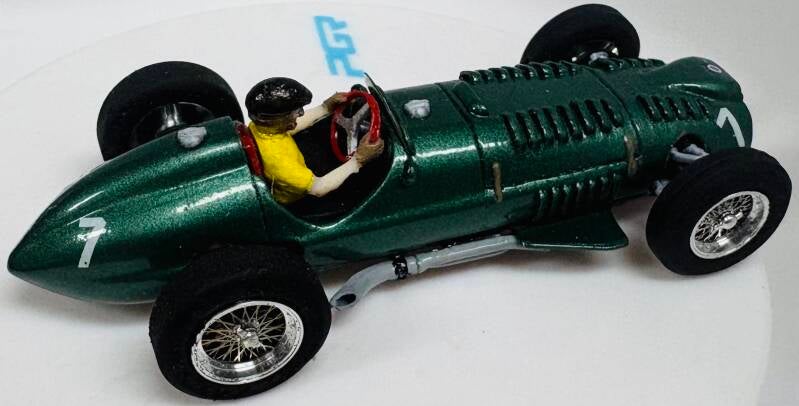
From a slot car modelling point of view though, this one became less about the chassis and more about the bodywork.
More specifically… louvres.
A lot of louvres.
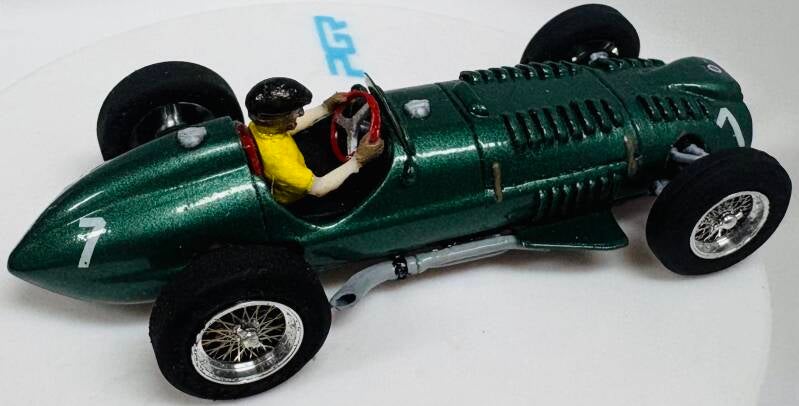
There are 40 of them on this car and, as it turns out, making dozens of tiny evenly spaced openings in thin material is one of those jobs that sounds much easier before you actually start doing it.
Still, I am pretty happy with how they turned out in the end. They give the car the look it really needed, and without them the body just did not quite capture the character of the original BRM.
As the title probably suggests, this was also an exercise in patience.
One of the nice things about projects like this is that each build usually forces you to improve some particular skill. In this case it was probably body finishing. Personally, I think this is the best paint finish I have managed so far. There is still always something you would change or improve next time, but overall this one came together better than expected.
Which, naturally, probably means the next one will fight me the entire way.
The BRM itself is such an outrageous little car that it almost does not seem real today. A supercharged 1.5 litre V16 producing enormous power, incredibly complicated, not always reliable, and driven in an era where “safety equipment” mostly meant having the confidence to continue making poor decisions at high speed.
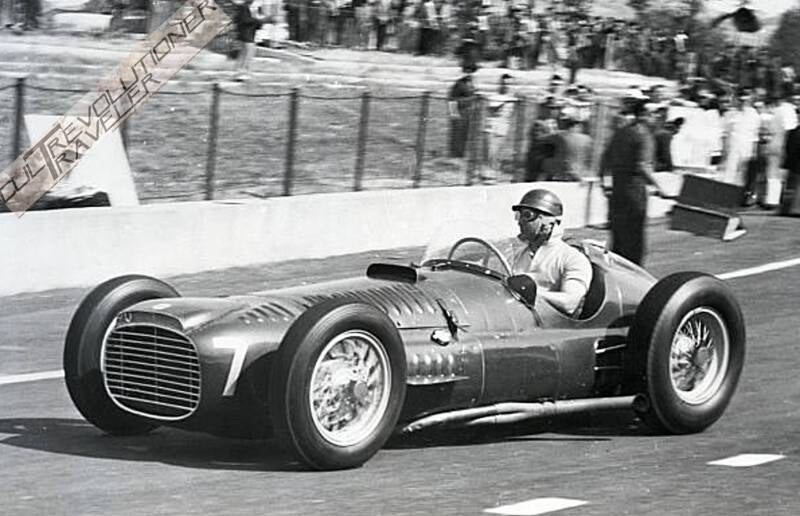
It was also driven by, among many others, Juan Manuel Fangio, who has always been my personal driver hero. Not simply because he was incredibly fast, although he obviously was, but because he proved that the fastest driver in the world could also be a true gentleman.
That combination seems far rarer now than it once was.
The accompanying period photograph shows Fangio driving the BRM at Pau during the early 1950s, alongside my own interpretation of the same remarkable little machine.
Underneath though, there is also a bit going on mechanically.
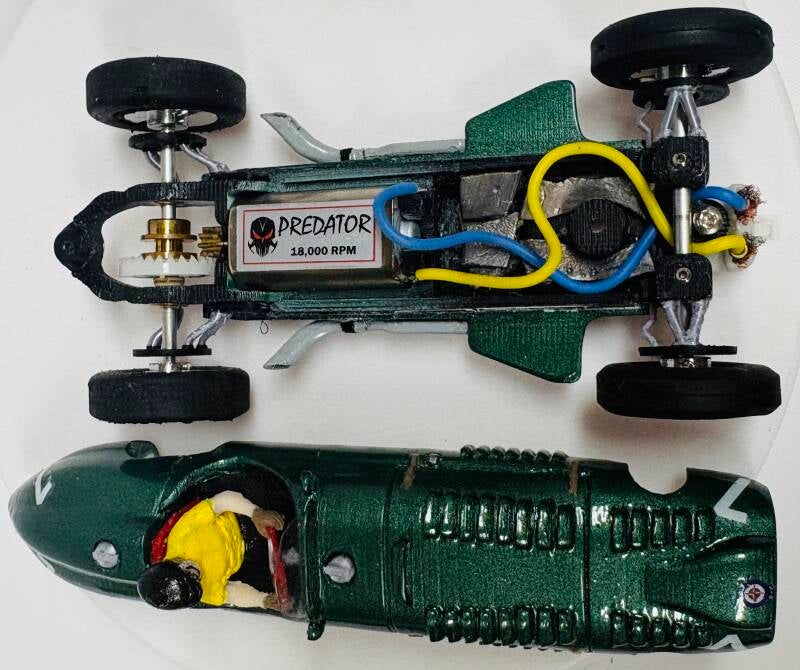
The very low cockpit sides meant that fitting a normal FC-130 short can motor was not really an option, so this car uses one of the Predator 18K slimline motors. Even then, the motor still needed to be offset very low in the chassis in order to clear the cockpit properly.
The slot car itself is built around our group’s current rules for this class: 18K maximum motor and 3:1 gearing. Since both motor speed and gearing are fixed, the only remaining variable for outright top speed is tyre diameter.
Because of that, I used the largest wheel and tyre combination I could buy at 25mm outside diameter. Apart from looking much closer to the proportions of the real car, the larger tyres should theoretically provide a worthwhile increase in top speed. But it does mean that the motor has to hang as low as possible to get the C of G acceptably low.
A 25mm tyre has a circumference of approximately 78.5mm, compared to 62.8mm for a 20mm tyre. That means the larger tyre travels about 15.7mm further per revolution which, at least in theory, should produce roughly a 25% increase in top speed.
Whether my driving ability can fully exploit this highly scientific engineering approach remains open to debate.
By the way, as you can probably imagine, the sound of this V-16 is amazing. It has been described as an angry dentist drill, mixed with a WWII aircraft, having a nervous breakdown.
Here are a couple of links that might bring a smile to your ears:
Goodwood Revival — “Incredible BRM V16 sounds insane”
https://www.carthrottle.com/news/watch-and-listen-rebuilt-15-v16-being-fired-first-time?
Click on this button to purchase this kit. Click and scroll the "Choose your model"dropdown list.
Add comment
Comments